The Mortality Mentor® Study Finds Small Estates Can Still Create Big Administrative Burdens After a Death
The Great Admin Transfer™ shows administrative complexity can persist despite legal documents and organized information
Press Release Disclaimer: This is a press release distributed through the XPR Media network. It has not been independently verified by our newsroom.
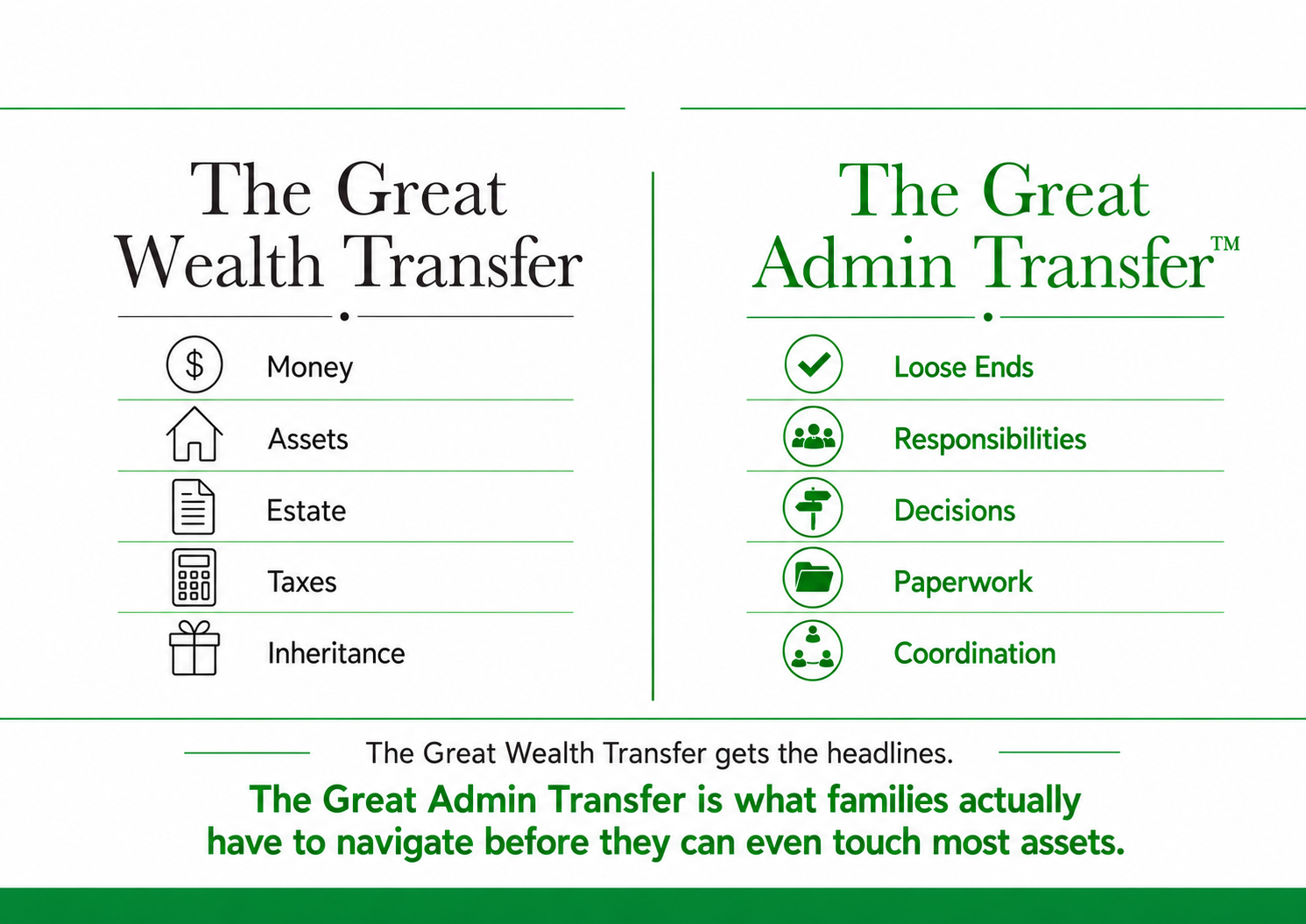

The Great Admin Transfer™ shows administrative complexity can persist despite legal documents and organized information
ST. LOUIS, MO, UNITED STATES, October 6, 2026 /EINPresswire.com/ — The Mortality Mentor® today announced the release of The Great Admin Transfer™, a 2026 research report based on an exploratory study of the practical and administrative realities people encounter when managing another person’s affairs during incapacity and after a death. Fielded from July through August 2026, the study generated 72 completed responses from people with lived experience and professionals whose work intersects with these responsibilities. The study was designed to identify patterns and areas for further discussion and research, not to produce nationally representative estimates.
“The Great Wealth Transfer gets the headlines, but before assets can move, somebody has to do the work,” said Robin Huffman, founder of The Mortality Mentor® and author of the report. “The Great Admin Transfer is the paperwork, decisions, coordination and follow-through that people actually have to navigate, no matter how much or how little is left behind.”
The findings suggest that a smaller estate does not necessarily mean a simpler administrative experience. Among lived-experience respondents, 53% reported managing estates valued below $500,000, including 24% below $100,000. Home/Property was the most frequently identified area of difficulty at 59%.
“More wealth can add complexity. Less wealth does not remove it,” Huffman said.
The work also rarely unfolded as neatly as a checklist might suggest. Lived-experience respondents rated the difficulty of managing another person’s affairs an average of 3.94 out of 5 compared with what they had expected. Among professional respondents, 64% identified “not knowing where to start” as the most common problem they observe. Prior experience did not necessarily translate into personal preparedness: only 24% of respondents with prior executor experience considered themselves well prepared with their own affairs.
The work can remain difficult even when a person has prepared with legal documents and organized information. “Having authority did not always make the process easier,” Huffman said. “Even people with the right documents and some level of organization could still encounter delays and friction when the plan met real-world institutional processes.”
The report brings these patterns together through the SOS Framework: Shared, reflecting how administrative burden can cross estate sizes and circumstances; Overload, reflecting how the work rarely follows a tidy sequence while grief, caregiving and competing responsibilities continue; and Systemic, reflecting friction across organizations with different processes, requirements and points of contact.
“Life’s hardest transitions shouldn’t require families to become project managers,” Huffman said. The report identifies practical opportunities to reduce the burden, including making essential information easier to find and use, strengthening professional guidance and handoffs, and improving organizational processes so people do not have to navigate each institution as a separate puzzle.
The Great Admin Transfer™ is intended to inform both personal preparedness and organizational improvement. Its findings may be relevant to individuals and families, financial institutions, healthcare organizations, government agencies, employers, legal professionals, funeral professionals, and other organizations whose processes intersect with serious illness, incapacity and death.
Read the report and access media resources at themortalitymentor.com/research
About The Mortality Mentor®
The Mortality Mentor® is a consulting and education business focused on the practical and administrative realities surrounding incapacity and loss. Its work serves individuals and families navigating these responsibilities as well as the organizations whose processes shape their experience. Services include research, education, speaking, after-loss support and consulting focused on making difficult processes more understandable, navigable and human.
About the Research
The Administrative Reality of Loss Research Study was conducted from July through August 2026. The exploratory survey included participants with lived experience managing another person’s affairs and professionals whose work intersects with incapacity, death and after-loss responsibilities. The study generated 72 completed responses and was designed to identify patterns, experiences and areas for further discussion and research. It was not designed to be nationally representative.
Robin Huffman
The Mortality Mentor
email us here
Visit us on social media:
LinkedIn
Facebook
Legal Disclaimer:
EIN Presswire provides this news content “as is” without warranty of any kind. We do not accept any responsibility or liability
for the accuracy, content, images, videos, licenses, completeness, legality, or reliability of the information contained in this
article. If you have any complaints or copyright issues related to this article, kindly contact the author above.

Media gallery